NVIDIA announces DLSS 5 and replaces traditional rendering with generative AI

NVIDIA is turning game graphics into an AI generation task. DLSS 5 abandons traditional upscaling and instead uses neural rendering to hallucinate photorealistic details directly over the original game art.
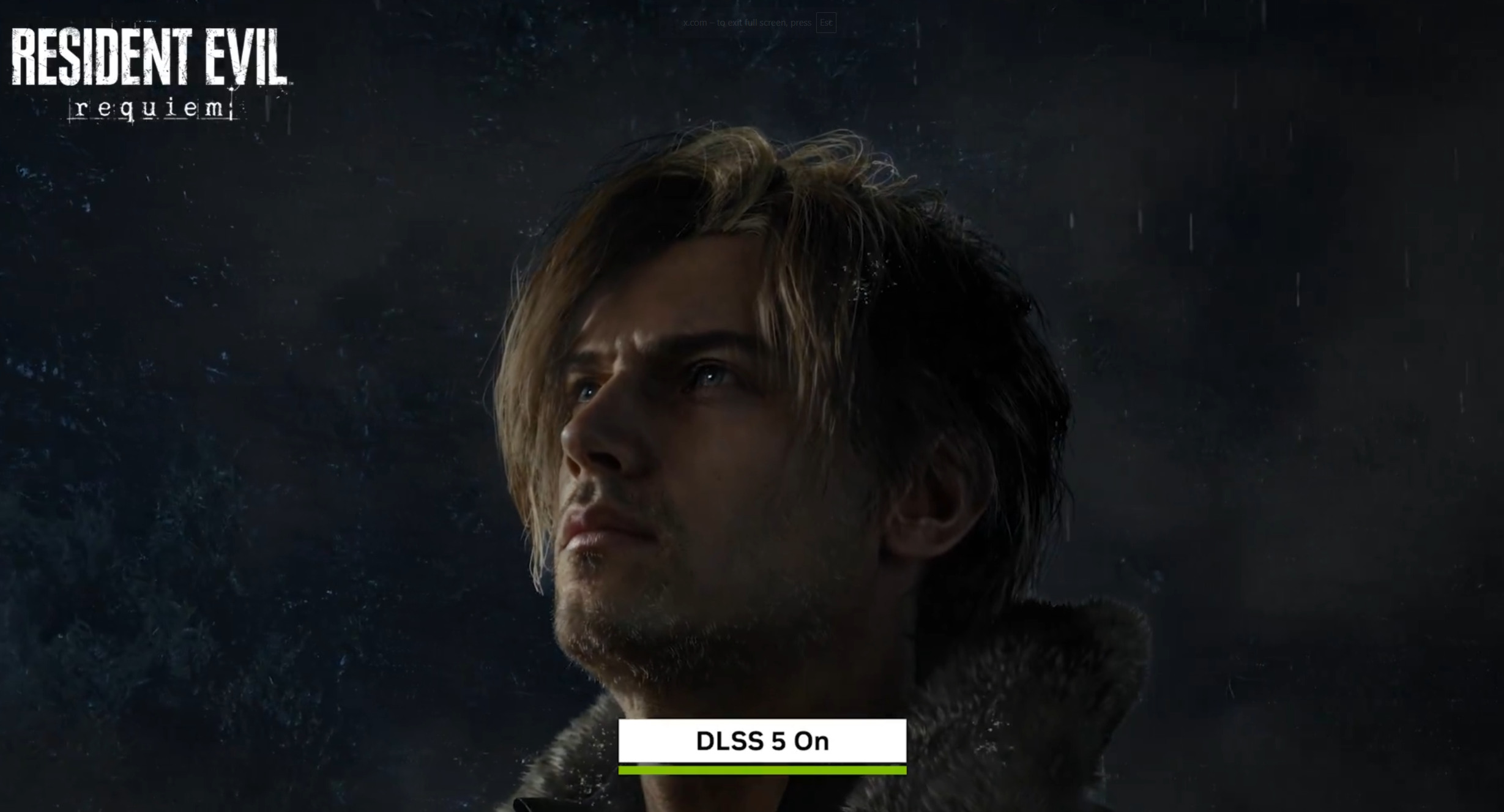
NVIDIA officially unveiled DLSS 5 during the GTC 2026 keynote. The company claims this update is the biggest graphics breakthrough since the introduction of ray tracing.
Key Takeaways:
- The technology: DLSS is no longer just an upscaler. Version 5 uses a real-time neural rendering model. The system predicts and infuses elements like lighting, skin textures, and environmental effects without rendering them from scratch.
- The rollout: The update launches this fall. Supported titles include Starfield, Hogwarts Legacy, and Assassin’s Creed Shadows.
- The controversy: The initial demo footage sparked immediate backlash. Critics argue the AI filter destroys the original 3D artistry. Characters look overly smoothed and suffer from a severe uncanny valley effect.
- The “AI slop” accusation: Gamers and artists are heavily criticizing the results. Many viewers feel high-end PC builds should rely on native rendering instead of generative overlays.
The Bottom Line: NVIDIA wants to replace traditional 3D artistry with a real-time generative AI filter.

If you need on-demand GPUs for training, fine-tuning, inference, or running open-source models, give RunPod a try.
- Available hardware: H100, H200, A100, L40S, RTX 4090, RTX 5090, and 30+ more
- Cost: significantly cheaper than AWS or GCP, billed per second, no contracts
- Setup: spins up in under a minute, 30+ regions worldwide

Get the core business tech news delivered straight to your inbox. We track AI, automation, SaaS, and cybersecurity so you don't have to.
Just read what you want, and be done with it.