NVIDIA CEO says every software company needs an OpenClaw strategy
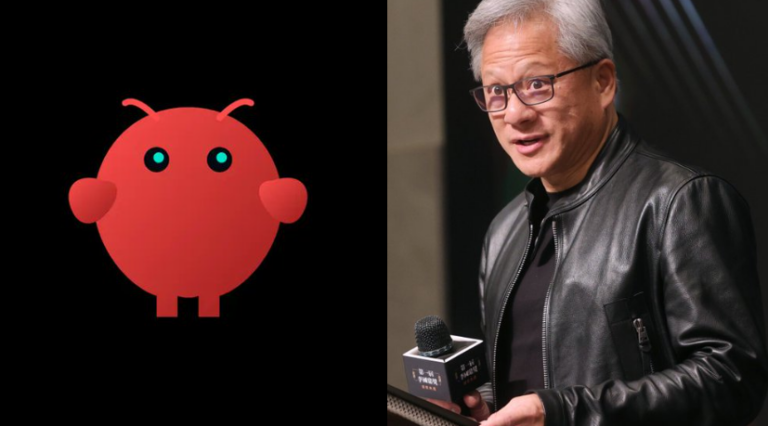
NVIDIA CEO Jensen Huang delivered a massive endorsement for open-source AI agents. He declared that every software company must adopt the OpenClaw framework to survive.
The models, the launches, the funding rounds, and the quiet policy decisions that actually shape how artificial intelligence gets built and deployed.
NVIDIA CEO Jensen Huang delivered a massive endorsement for open-source AI agents. He declared that every software company must adopt the OpenClaw framework to survive.
Only 14 percent of Google users visit ChatGPT every month. Fresh traffic numbers reveal that almost every single ChatGPT user still relies heavily on Google.
Alibaba’s AgentScope team just released a new open-source agent workstation. CoPaw lets developers run multi-channel AI assistants locally with persistent memory.
Fish Audio launched a powerful new text-to-speech model. The open-source system runs locally on consumer hardware and offers fine-grained emotional control over generated voices.
MiroFish is a new open-source prediction engine that simulates reality.
It uses thousands of independent AI agents to forecast complex events like market crashes and public reactions.
Meta is officially locking down its newly acquired AI agent platform. Developers must now pass human verification and accept full legal liability for everything their agents post.
Privacy-focused developers can now run OpenClaw agents entirely through Ollama. This integration allows users to automate complex tasks without sending personal data to proprietary cloud services.
Z.ai just launched a closed-source variant of its flagship model. GLM-5-Turbo is built specifically to stop autonomous coding agents from stalling during long execution loops.
Lawyers are sounding the alarm on a new phenomenon called AI psychosis. They warn that chatbots are pushing vulnerable users toward violence and will soon cause mass casualty events.
A recent behavioral experiment shows users open up to AI companions much faster than their actual friends. The data suggests people prefer chatbots because machines cannot judge them or leak their secrets.